
LIVING WITH GOUT ARTHRITIS, A CHRONIC INFLAMMATORY DISEASE
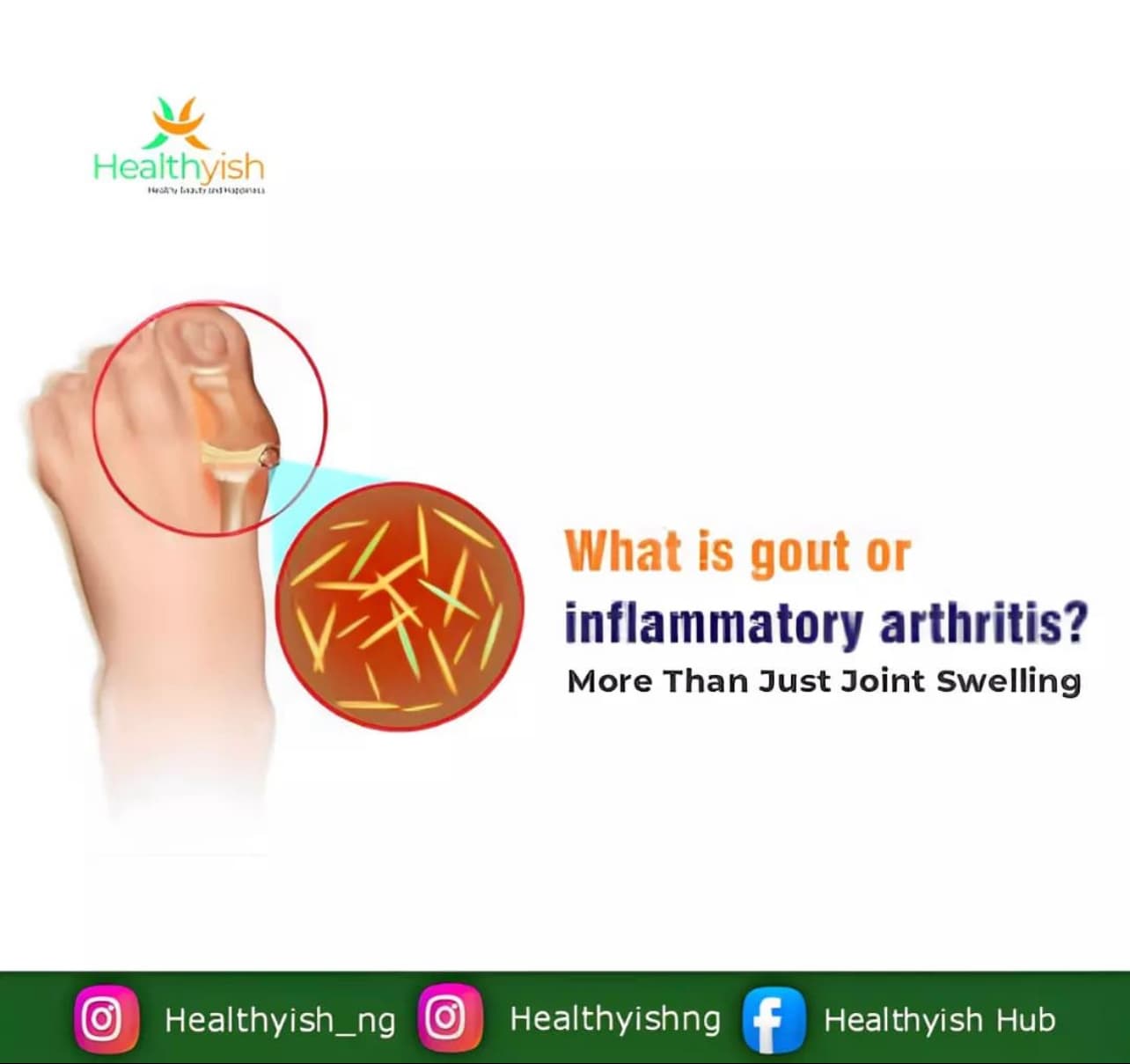
Gout arthritis is a painful and debilitating condition caused by the accumulation of uric acid crystals in the joints leading to pain, swelling, redness and tenderness of the joint.
My dear, my joints ache. I can't stand properly, and it looks like it's swelling' Mrs Junaid complained.
'Honey, let me pick my car keys and go to the hospital for a checkup' Her husband replied.
'Sir, from the symptoms your wife presented with and the tests we carried out, your wife is suffering from gout arthritis.'
'What is the prognosis of the disease?'
'With the appropriate lifestyle and dietary modifications, the symptoms will subside, and she will be able to live a normal life. Also, there's a health and lifestyle coach that will help you through the process. Here's her business card.' The doctor stretched the business card towards him.
'Alright. Thanks doc.' He said as he collected the business card.
Gout arthritis is a painful and debilitating condition caused by the accumulation of uric acid crystals in the joints leading to pain, swelling, redness and tenderness of the joint. Although medication plays a vital role in managing gout, lifestyle and dietary modifications also play a significant role in preventing flare-ups and reducing the severity of symptoms. By making careful and appropriate choices, individuals with gout can take control of their condition and improve their quality of life.
1. Maintain a Healthy Weight: Maintaining a healthy weight is crucial for managing gout. Excess body weight is associated with higher levels of uric acid, increasing the risk of flare-ups. Regular exercise can help with weight management but opt for low-impact activities that are gentle on the joints, such as swimming, cycling, and walking.
2. Take enough water: Adequate hydration is essential for flushing out excess uric acid from the body. Aim to drink plenty of water throughout the day to prevent the buildup of uric acid crystals in the joints. Herbal teas and water-rich fruits like watermelon can also contribute to hydration.
3. Limit Alcohol Consumption: Alcohol, particularly beer and spirits, can contribute to elevated uric acid levels and trigger gout attacks. If you choose to drink, opt for moderate amounts of wine and avoid drinking too much alcohol.
4. Reduce Consumption of Purine-Rich Foods: Purines are compounds found in certain foods that break down into uric acid during digestion. Limit consumption of high-purine foods like organ meats (liver, kidneys), seafood (anchovies, sardines, mussels), and red meat. Plant-based proteins like beans, lentils, and tofu are better alternatives.
5. Choose Low-Fat Dairy: Low-fat dairy products like milk, yogurt, and cheese have been shown to have a protective effect against gout. These foods can help lower uric acid levels and reduce the risk of gout attacks.
6. Consume a Mediterranean Diet: The Mediterranean diet is rich in fruits, vegetables, whole grains, lean proteins, and healthy fats. It has anti-inflammatory properties and may help reduce the frequency and severity of gout attacks. Incorporate olive oil, nuts, fatty fish, and a variety of colorful fruits and vegetables into your meals.
7. Avoid Sugary Beverages: Sugary drinks like soda and fruit juices have been associated with an increased risk of gout. These beverages can lead to weight gain and may worsen uric acid levels. Opt for water, herbal tea, and natural fruit juices in moderation.
8. Consume Cherries and Berries: Cherries and berries have been found to have anti-inflammatory properties and may help lower uric acid levels. Include these fruits in your diet as a tasty way to manage gout symptoms.
9. Monitor Portion Sizes: Controlling portion sizes can help prevent overconsumption of purine-rich foods. Use a food scale or measuring cups to ensure you're eating appropriate amounts.
10. Avoid Crash Diets: Rapid weight loss or extreme dieting can trigger gout attacks. Focus on gradual and sustainable weight loss strategies, incorporating balanced nutrition and exercise.
Lifestyle and dietary modifications can significantly impact the management of gout arthritis. By making informed choices, individuals can reduce the frequency and intensity of gout attacks, improve their overall health, and enjoy a better quality of life. It's essential to work with healthcare professionals, including a health and lifestyle coach, to develop a personalized plan that addresses individual needs and preferences while effectively managing gout.
NB:We are bio individuals which is to say not all size fits all.prioritizing yourself and your journey with the support and guidance of a health coach will further help in your progress and such a person would be able to get detailed information about themselves that could facilitate results.
Want support tailored to your health goals?
Request a Healthyish consultation to discuss practical, personalized guidance.
Request a consultation